
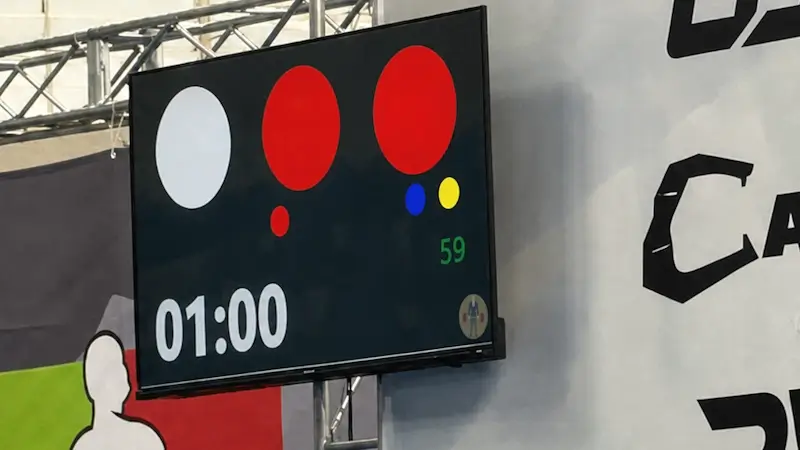
In a powerlifting meet, referees use lights to indicate whether a lift is successful, and understanding them is essential for every powerlifter. In the most basic sense:
- ⚪ White light: Good lift
- 🔴 Red light: No lift
When a lift receives a red light, the red, blue or yellow cards below explain why the lift wasn't good (in IPF rules - other federations may use different colors or not use them at all). They may be physical cards the referee raises up or, in modern referee lights systems such as the EasyLifter system, the colors are shown directly below the red light on the screen.
Let's learn what each color card means in the squat, bench press and deadlift:
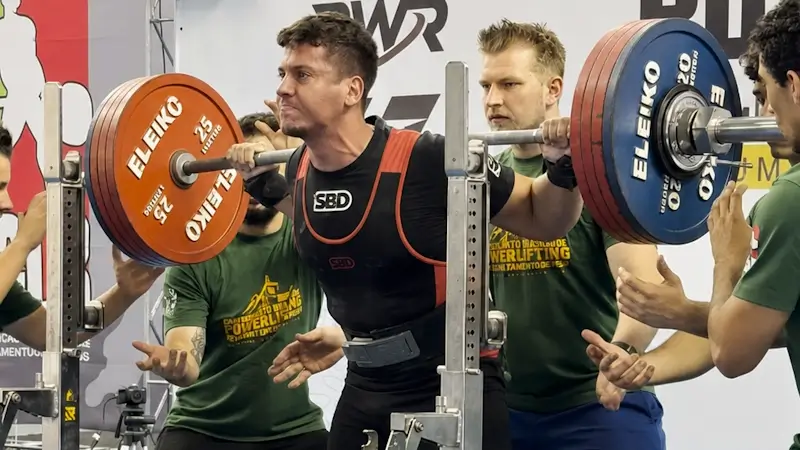
Squat Referee Cards
Each card corresponds to a different type of rule violation:
🔴 Red card: Insufficient depth. Under IPF rules, the top surface of the legs at the hip joint must descend below the top of the knees.
🔵 Blue card: Downward movement of the bar or failure to stand upright with knees locked.
🟡 Yellow card: Failure to follow commands, moving feet laterally, contact with the spotters, or other execution failures[1].
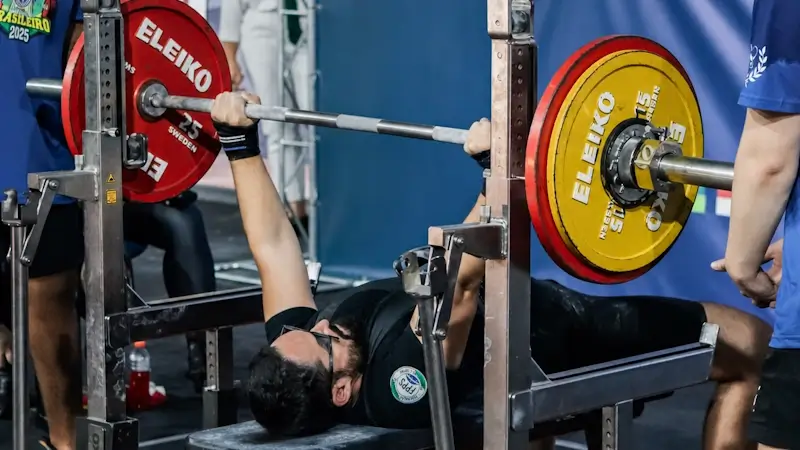
Bench Press Referee Cards
🔴 Red card: Failure to lower elbows to the required depth, or failure to touch the chest with the bar.
🔵 Blue card: Downward movement of the bar or failure to lock elbows at the end.
🟡 Yellow card: Failure to follow commands, raising head/glutes/feet, or other execution failures[1].
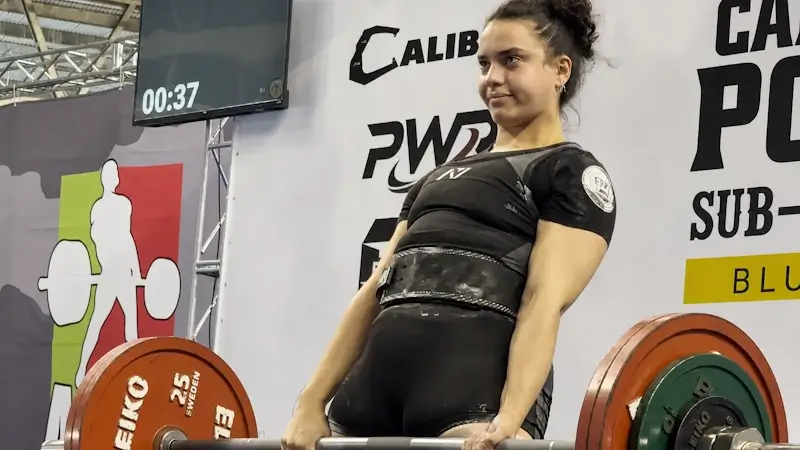
Deadlift Referee Cards
🔴 Red card: Failure to lock the knees or to finish standing erect with the shoulders back.
🔵 Blue card: Downward movement of the bar, or supporting the bar on the thighs.
🟡 Yellow card: Failure to follow commands, or other execution failures[1].
How to Avoid Red Lights at Your Next Meet
Learning the referee cards will help you quickly understand why exactly a lift received a red light! More importantly, learning the reasons behind each card can help you prepare more effectively for competing.
Before your next meet, focus on:
- Always squatting to competition-standard depth;
- Pausing when the bar is on your chest during the bench press;
- Finishing deadlifts with locked knees and shoulders back;
- Controlling the bar throughout every lift;
- Asking your coach or workout partner to practice the referee commands with you;
- Reviewing the IPF technical rules before competing.
Small technical details can make the difference between a good lift and a no lift.
Final Thoughts
Referee cards provide immediate feedback when a lift is unsuccessful. While the colors have a different meaning depending on the lift, it's worth learning the main ones so you can quickly make adjustments during competition. As a general "tip", you can remember that red cards are related to not reaching the lift's full range of movement, blue cards mean downward motion or lockout issues, and yellow cards usually indicate command or execution errors.
Share this post with your powerlifter friends so they can identify mistakes faster and make better adjustments before their next attempt!
- A yellow card may be given for any failure to comply with the general description of the lift. We covered the main examples for brevity, but you should always read the complete Technical Rulebook before competing. ↩